

Over the last 1 year, I researched and reviewed hundreds of real estate website examples—from individual agent websites to large builder and property portal platforms. And i have seen One pattern is very clear. Most real estate websites look professional, but fail to generate leads.
Yet… no calls, no WhatsApp messages, no inquiries.
Because most real estate website designs are created with a designer’s mindset, not a buyer’s mindset.
A real estate website is not just a digital brochure.
A successful real estate website design should:
Capture attention in the first 5 seconds
Build trust instantly
Guide visitors toward a clear action
It should work like a 24/7 real estate salesperson—educating buyers, building trust, and pushing them gently toward action.
In this blog guide, I will explain in detail:
What actually makes a lead-generating real estate website?
Why website important for the real estate business?
What buyers expect today?
Real estate Marketing strategy Through real estate website lead generation design.
And 10 best real estate website examples that consistently convert visitors into real inquiries.
How to create a professional website for real estate property selling purpose with simple steps?
I will explain each and every point in detail, just stay connected with me, believe me you will know a lot and you will learn a lot from this blog.
Why Do Most Real Estate Websites Fail to Generate Leads?
I know, real estate websites look visually stunning. Big sliders, fancy animations, high-quality property images — everything seems perfect.
But here’s some problem: they rarely convert visitors into real leads.

Why does this happen? Let’s break it down.
1. Focus on Looks, Not Strategy
Most property website examples are built to impress. Designers focus on aesthetics, not the buyer’s journey.
But buyers don’t come to be impressed. They come with a purpose:
Find a property that fits their budget and lifestyle
Trust the agent or agency
Take immediate action, like calling or sending an inquiry
A website that looks good but doesn’t guide the visitor will fail at lead generation.
2. No Clear Call-to-Action (CTA)
A common mistake in real estate agent websites is weak or hidden CTAs.
Buyers should know exactly what to do next:
Call now
WhatsApp inquiry
Schedule a site visit
If a visitor has to search for how to contact you, they leave — and your website loses its lead potential.
3. Ignoring Buyer Psychology
Most websites don’t consider what buyers really want.
Visitors ask:
Can I trust this agent?
Is this property right for me?
Will I get value for my money?
If these questions are not answered instantly, buyers leave, even if the website looks professional.
4. Poor Mobile Experience
Over 70% of property searches happen on mobile devices today.
Many real estate websites fail to:
Load fast on phones
Display images correctly
Make CTAs clickable
A mobile-unfriendly website kills leads silently, without the agent realizing it.
5. Lack of Trust and Credibility
Buyers want proof before contacting you.
Generic stock images, missing testimonials, or no clear contact info make your website less trustworthy.
Without trust signals, even high-intent visitors hesitate to reach out.
6. Confusing Navigation and Overloaded Design
Too many menus, sliders, or unnecessary animations make the website confusing.
A lead-focused real estate website:
Guides visitors step by step
Shows clear property categories
Makes it simple to find and inquire
Confusion = bounce. Bounce = lost leads.
7. No Strategy for Lead Capture
Many agents rely solely on their homepage or property listings.
But lead generation requires strategy:
Dedicated landing pages for each project
Smart filters for buyer intent
Forms, WhatsApp, or chat options at every step
Without these, even traffic won’t convert.
Why Is a Website Important for a Real Estate Business Today?
Today’s buyers do not call agents first.
They search online, compare options, and research silently.

Your website becomes your first impression — even before the first call.
A strong real estate website:
- Builds trust before direct contact
- Shows professionalism and credibility
- Buyers No Longer Call First — They Research First on google
- Full control over leads
- Brand authority
- Long-term SEO benefits
- That’s why experienced agents never depend on portals alone.
What Do Buyers Expect When They Visit a Real Estate Website?
The First 5 Seconds Decide Everything
When a buyer lands on your website, they immediately look for:
- Property type & location
- Price clarity or range
- Visual proof (real photos)
- Contact options
- Buyers want clarity, not creativity.
- Trust Signals That Actually Influence Buyers
High-converting real estate websites include:
- Real testimonials
- Google reviews
- Completed project images
- Clear office/contact details
- Trust creates inquiries.
What Core Elements Help Real Estate Websites Generate Leads?
1. Strong Above-the-Fold Message
Your first screen must clearly explain:
Who this property/service is for
Why it is valuable
What to do next
2. Clear and Repeated Call-to-Action (CTA)
High-performing CTAs include:
Call Now
WhatsApp Us
Book Site Visit
Get Price Details
CTAs should appear multiple times, not just once.
3. Lead Capture Tools That Actually Work
Short forms (3–4 fields max)
Click-to-call buttons
WhatsApp integration
Long forms kill conversions.
4. Mobile-First Design (Non-Negotiable)
More than 70% property searches happen on mobile.
If your site isn’t mobile-optimized, you are losing serious buyers.
How Do the Best Real Estate Websites Generate Leads? (10 Examples Explained)
1. Website name – Tata Housing.com
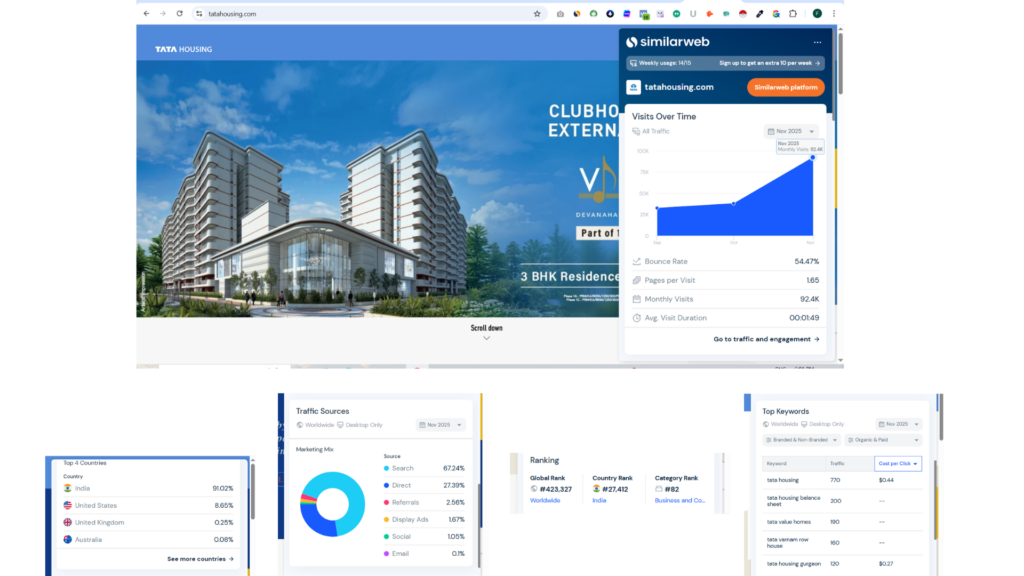
Website link- Tatahausing
Monthly visits- 92.4k
Type: Real Estate Developer
Target audience website –Middle Class, Upper Middle Class, High-Income / HNI, NRIs High Investment + High-quality homes
Problem it’s solve
Trust- 100% transparency
Clear documentation buyer feel safe.
budget management-
Projects in high-growth areas
Connectivity-focused planning
Ui and Ux highlight-
Ui highlight
Clean & Premium Layout
High-Quality Project Images
Strong Typography
Organized Menu / Navigation
Consistent Branding
Ux hight
Easy Project Search Experience
Detailed Project Pages
Quick Inquiry Forms (CTA Everywhere)
Smooth Mobile Experience
Trust Elements Everywhere
Zero Distraction
2. Website name – Lodha
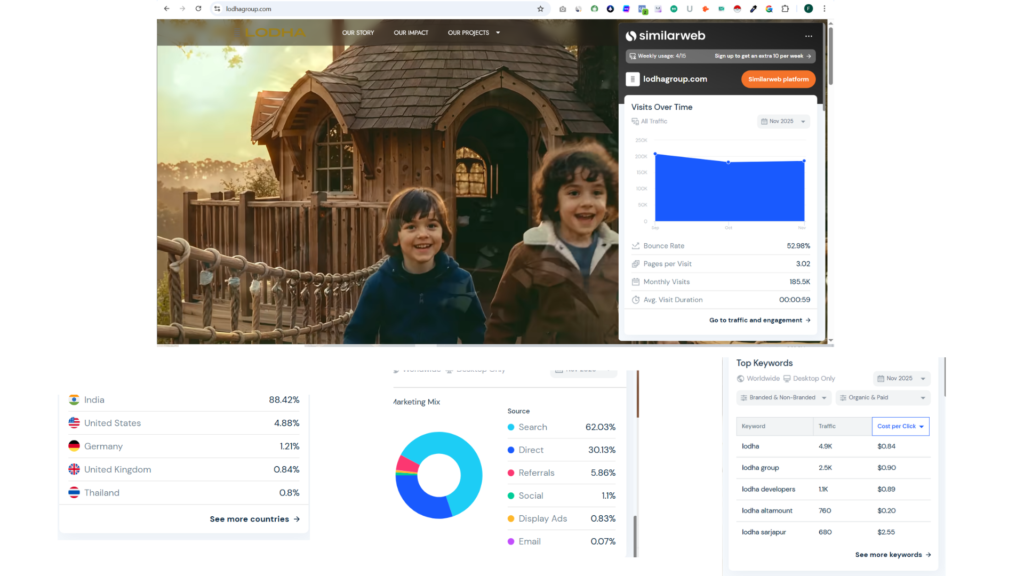
Website link- Lodha
Monthly visits- 185.5k
Type – real estate developer
Target audience of website-Mid-Income Home Buyers, Luxury & Ultra-Luxury Buyers, NRI Property Investors, Investors Seeking ROI, Families Looking for Gated Communities.
Problem it’s solve-
A clear project filters section
Under-construction/ready-to-
builder trustworthy?
Pricing range
Location map
User gets 80% clarity before contacting.
Strong CTAs
Mobile-first approach is strong.
Ui ux highlight-
UI = Visual design, branding, appearance.
Premium, Clean, Modern Design
High-Quality Visuals
Strong Typography
Clear Menu Navigation
Brand Consistency
UX = Experience, flow, ease of use, lead generation.
Easy Project Discovery
Information-Rich Project Pages
Lead Generation Focused
Mobile-First Flow
Zero Clutter
Smooth Navigation Structure
Location Maps & Walkthrough Integrated
3. Website name – Godrej Properties
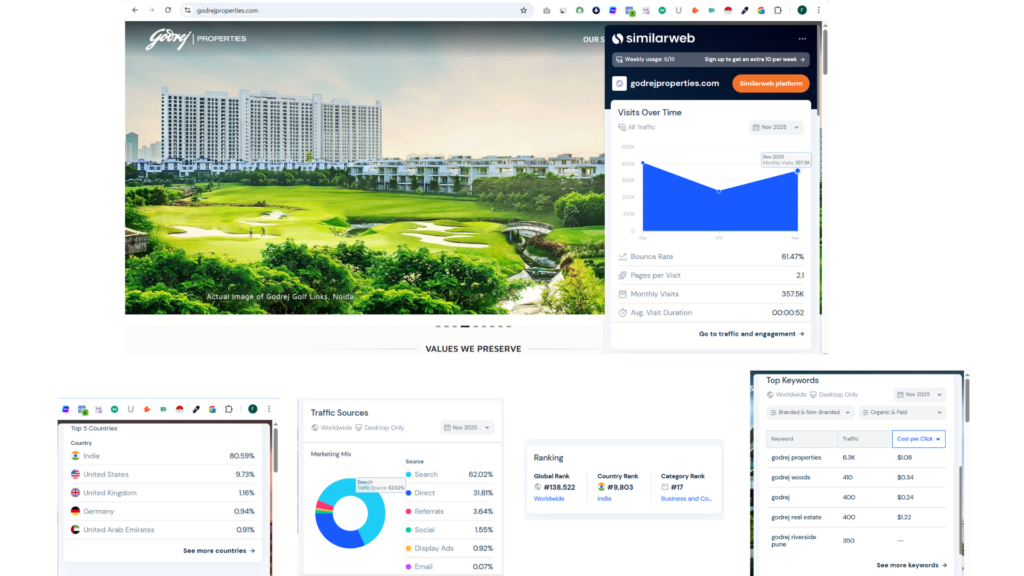
Website link- Godrej Properties
Monthly visits- 357.5k
Website type- real estate developer
Target audience of website- Mid-Premium Home Buyers, Premium & Luxury Buyers, NRI Buyers, First-Time Home Buyers, Investors,
What problem solve –
Budget
Configuration
Location
Godrej brand value
Awards
Legacy
Customer testimonials
Sustainability certifications
Ui and ux highlight
UI = Design, visuals, branding.
1. Minimal & Clean Design
2. Consistent Branding
3. High-Quality Visuals
4. Typography That Feels Modern
5. Clear Navigation Menu
UX = Usability, journey, flow, lead generation.
4. Website name – DLF India
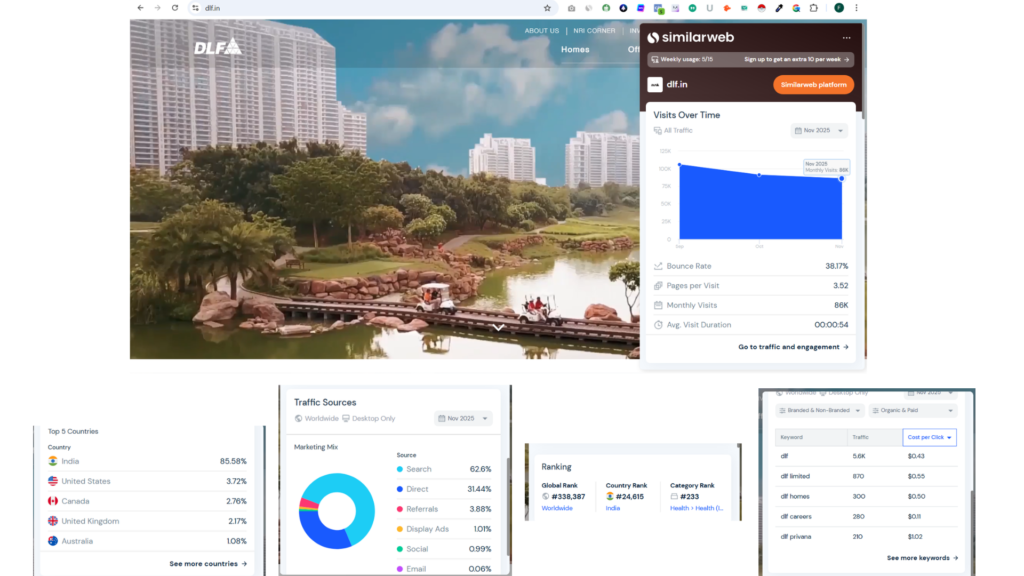
Website link- DLF India
Monthly visits- 85k
Website type- Luxury real estate developer
Target audience of website –
Who Is the Target Audience of Prestige Group’s Website?
5. Website Name: Prestige Group
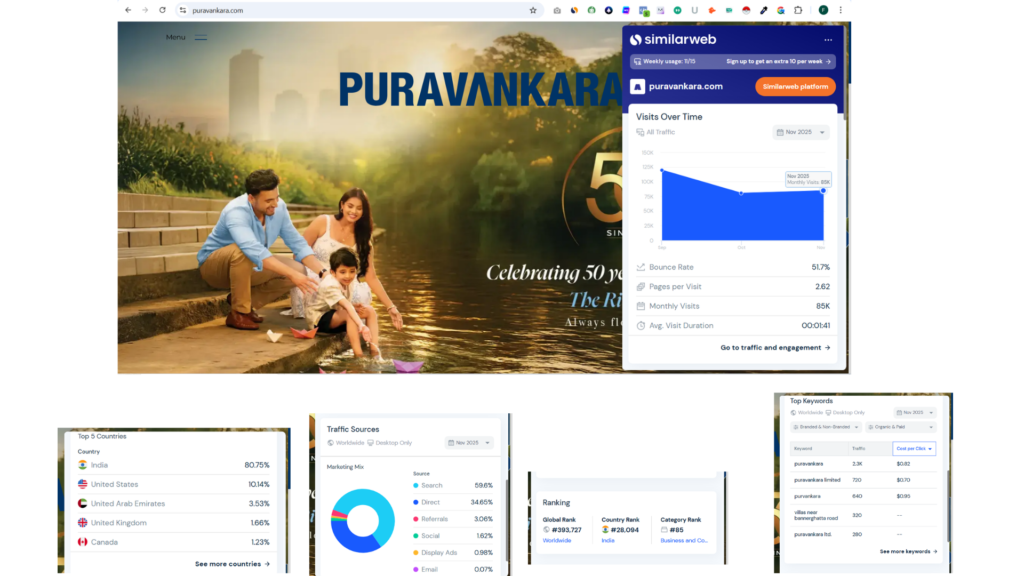
Website link- Prestige Group
Monthly visits- 257.7k
Type: Real Estate Developer
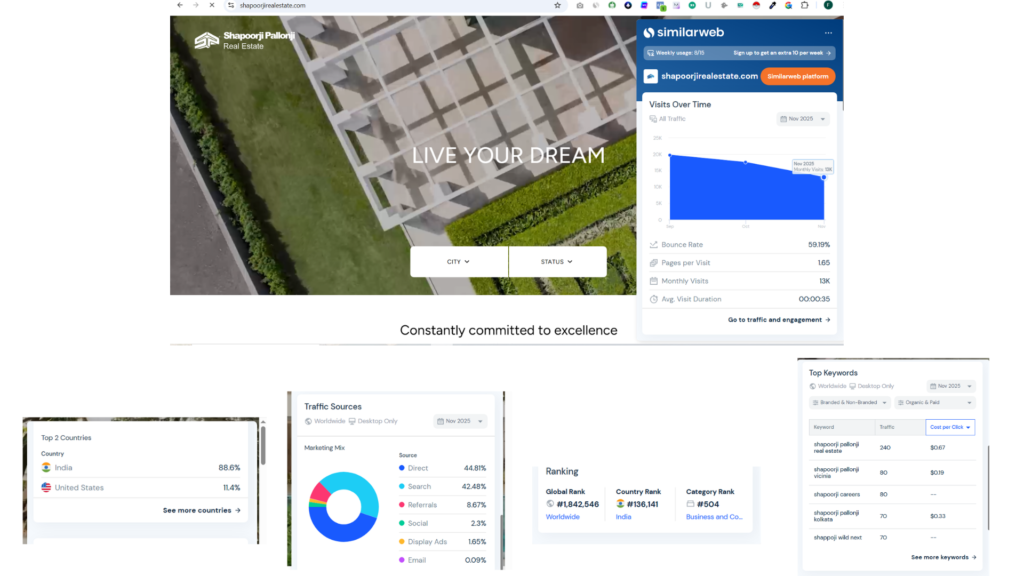
6. Website name- Shapoorji Pallonji
7. Website Name-Brigade Group
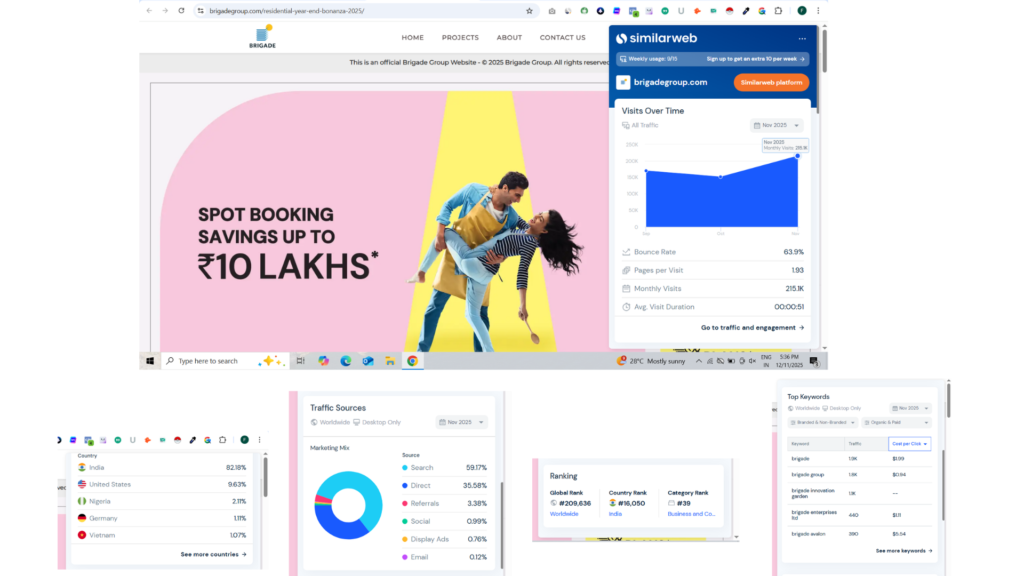
Mid-Income & Mid-Premium Home Buyers
8. Website Name- Puravankara
Middle-Income & Upper-Middle-Income Home Buyers
9. Website Name- Ajmera
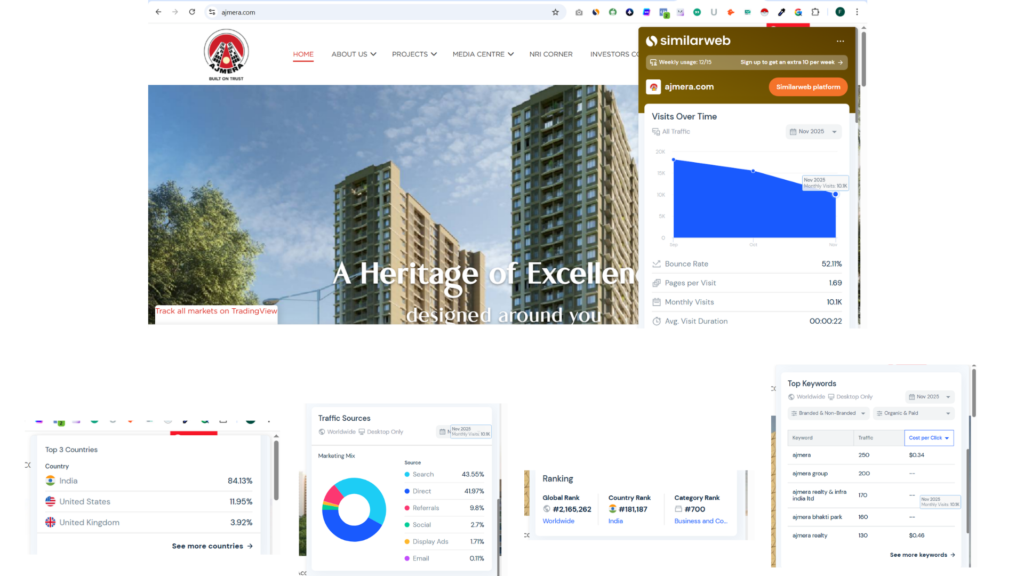
Middle-Income & Upper-Middle-Income Home Buyers
10. Website Name- Shriramproperties
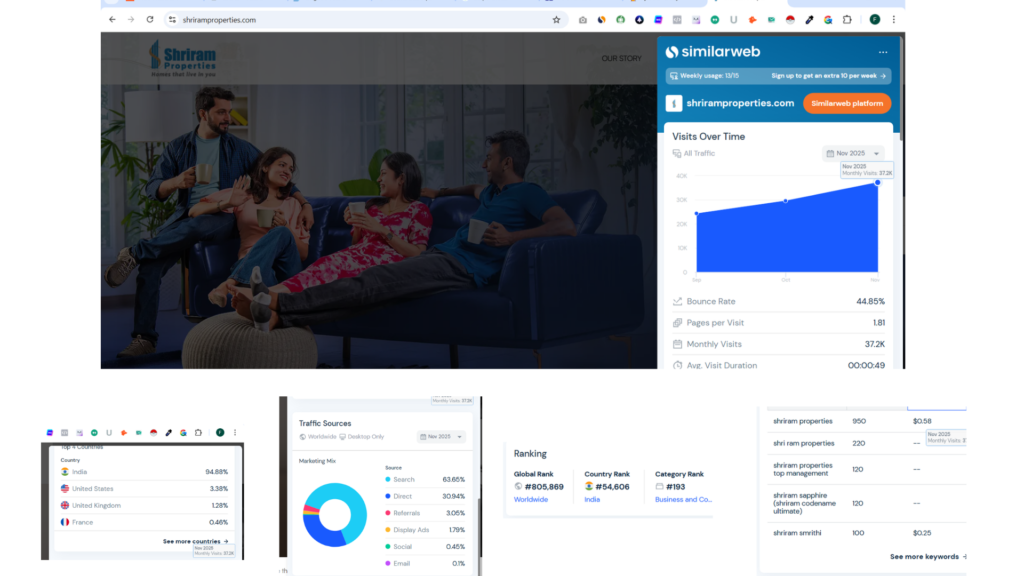
Middle-Income & Budget-Conscious Home Buyers
Also read this
Facebook vs Instagram for real estate agents: which is better?
Why does every real estate agent need social media in 2025?
Social Media Marketing for Real Estate: A Complete Beginner’s Guide 2025?
How do you attract customers to buy property?
How to be a successful real estate seller in India?
What types of marketing is best for real estate?
Social media post ideas to attract property buyers fast in 2025
What Are the Biggest Mistakes That Stop Lead Generation?
- No clear CTAs
- Slow website speed
- Ignoring mobile users
- Fake stock images
- No trust proof
- These mistakes quietly kill your sales pipeline.
How Can Real Estate Agents Build a Lead-Generating Website Step by Step?
do you know, A real estate website is not just pages and pictures.
It is a bridge between a confused buyer and a confident decision.
If you want your website to generate real leads, not just traffic, these six steps are non-negotiable.
1. Define your ideal buyer persona
Most real estate websites fail because they try to speak to everyone — and end up connecting with no one.
Ask yourself honestly:
Are you targeting first-time home buyers?
Investors looking for rental income?
Families searching for safety and space?
Luxury buyers chasing lifestyle and status?
Every buyer feels different emotions:
First-time buyers feel fear and confusion
Investors think logically about ROI
Luxury buyers look for emotion and prestige
Your website messaging, images, layout, and even CTA language should reflect one clear buyer type.
2. Choose the correct website type (agent, builder, luxury, local)
A big mistake agents make is copying random real estate website examples without understanding purpose.
Different businesses need different website structures:
Agent websites focus on trust, expertise, and personal connection
Builder websites focus on projects, timelines, and urgency
Luxury websites focus on lifestyle, emotion, and minimalism
Local real estate websites focus on location authority and local SEO
If you choose the wrong website type, even good traffic won’t convert.
3. Create buyer-focused content
Buyers don’t visit a real estate website to read about:
Your company history
How many awards you won
Generic marketing promises
They come to find answers to their problems.
High-converting content answers questions like:
Is this property right for my budget?
Is this location safe and future-proof?
What happens after I contact this agent?
Use:
Simple language
Clear explanations
Honest information
4. Place CTAs strategically
Many websites hide CTAs like they are afraid of selling.
A lead-generating real estate website does the opposite.
Strong CTAs should:
Appear above the fold
Be repeated naturally
Feel helpful, not pushy
Examples:
“Get Price Details”
“Book a Site Visit”
“Talk to a Property Expert”
5. Integrate WhatsApp, CRM & chat
In real estate, response time can make or break a deal.
When a buyer clicks:
They expect a reply quickly
They want easy communication
They don’t want long forms
That’s why:
WhatsApp builds instant comfort
Live chat reduces hesitation
CRM ensures no lead is forgotten
Fast response = higher trust = better lead quality.
6. Track leads and optimize continuously
A real estate website is not “launch and forget.”
You must track:
Where leads come from
Which pages convert best
Where visitors drop off
Small improvements create big results:
Changing CTA text
Improving page speed
Simplifying a form
The best agents don’t guess — they optimize based on data.
Can a Real Estate Website Replace a Salesperson?
No — but it pre-qualifies buyers.
- Builds trust
- Answers objections
- Saves time
- Improves closing ratio
What Should You Do If Your Website Is Not Generating Leads?
Start with a website audit:
- Check speed
- Review CTAs
- Analyze user behavior
- If improvements don’t help, redesign with strategy — not just visuals.
Conclusion
real estate website should do more than just look good. It should build trust, guide buyers, and generate real inquiries.