

If you want to attract more buyers and sellers, having a good website design can make a big difference. A Real estate website gives buyers one place to explore your properties, learn about your business and contact you easily. Unlike social media, your website is available 24/7 and gives you complete control over how you present your band.

Did you know professional real estate website solves common problems such as missing inquiries, limited visibility and difficulty sharing property details. Instead of sending photos and information separately, you can showcase everything in one place and make it easier for buyers to take the next step.
In this blog, you’ll learn how to create a real estate website that attract buyers and sellers more properties. We’ll cover the essential pages every website needs, the features buyers expect and simple ways to turn visitors into inquiries without making your website complicated.
Start With a Clear Goal Before Building Your Website
Before you start your website design for real estate, decide what you want your website to do. Do you want more property inquiries, showcase listings, or build trust with buyers?
Without a clear goal, even a beautiful real estate website may fail to bring results. You can easily create your website on WordPress in 5 to 10 days without any technical hassles.
For example, your website can help you:
- Generate more inquiries
- Showcase properties professionally
- Build trust with potential buyers
- Encourage visitors to schedule a site visit
- Once you know your goal, choosing the right pages and features becomes much easier.
Include These Pages Every Real Estate Website Needs
A Successful real estate website doesn’t need a lot of pages. Instead, focus on the pages that help buyers find information and contact you easily.
Here are the essentials:
Home Page: make a strong first impression. Visitors should quickly understand who you are, what properties you offer, and how to get in touch.
Property Listings Page: Organize your listing clearly so buyers can easily browse available properties.
Individual Property Pages: Include high-quality photos, pricing, location and key details that buyers want before making an inquiry.
About Pages: Share your story, experience, and expertise. This helps build trust with potential clients.
Contact page: Make it easy for visitors to reach you with a contact form, phone number, or whatsApp button.
Blog Page: Publish Helpful content regularly. Besides educating buyers, a blog can improve your website design for real estate strategy by bringing free traffic from google.
Make Property Listings Easy to Browse
No matter how good your real estate website looks, buyers may leave if they can’t find properties quickly. That’s why your listings should be simple and easy to browse.
For a better website design for real estate, make sure every listing includes:
- High quality photos and walkthroughs videos
- Price and location
- Property type and size
- Key features, such as bedrooms and bathrooms
Add Lead Generation Elements to Turn Visitors Into Inquiries
A beautiful real estate website is useless if visitors leave without contacting you. that’s why your website design for real estate should make it easy for buyers to take the next step.

Make sure your website includes:
- Simple contact forms
- Click to call buttons
- WhatsApp chat
- Schedule a visit buttons
- Property inquiry forms
Build Trust Before Asking Visitors to Contact You
Most buyers won’t contact you right away. First they want to know whether they can trust you. That’s why trust should be a key part of your website design for real estate.
To make visitors feel more confident, add:
- Client testimonials
- Google reviews
- Photos of your team
- Recently sold properties
- Your experience and achievements
Optimize Your Website for Mobile Users
Most buyers search for properties on their photos. Therefore, your website design for real estate should work smoothly on mobile devices, not just on desktops.
To improve the mobile experience, make sure your real estate website has:
- A responsive design
- Fast loading pages
- Easy to read text
- Simple navigation
Common Mistakes That Stop Real Estate Websites From Generating Leads
Even a beautiful real estate website can fail to generate inquiries if it makes common mistakes. Therefore, avoid these issues when
Planning your website design for real estate:
- Slow loading pages
- Poor-quality property photos
- No clear call to action
- Complicated navigation
- Missing contact information
- A website that doesn’t work well on mobile
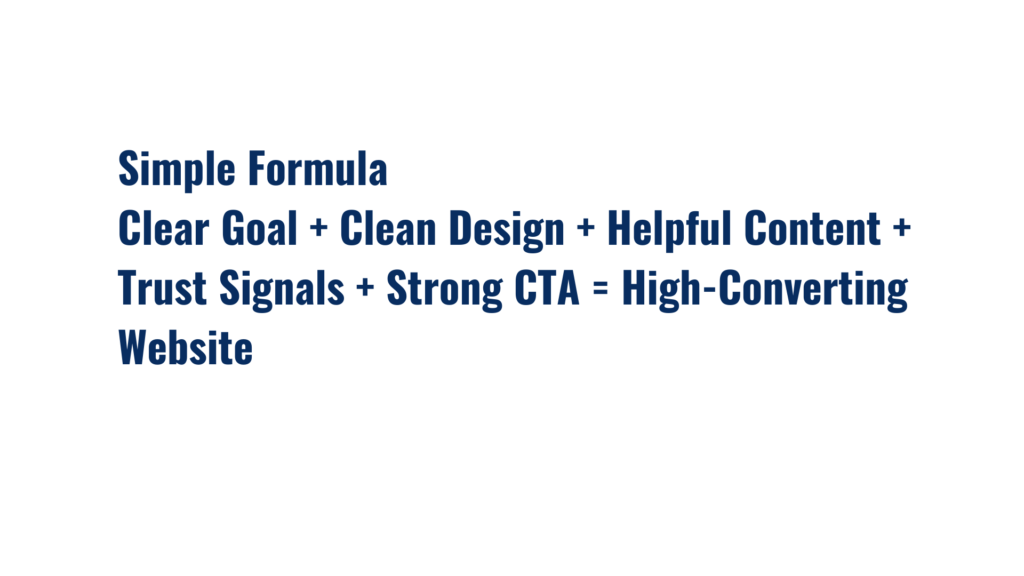
A Simple Formula for a High-Converting Real Estate Website
Also read
Conclusion
Creating a real estate website in not just about putting your properties online. In this blog, we’ve covered how to set clear goals, choose the right pages, organize property listings, use photos and videos effectively, add lead generation elements build trust, optimize for mobile users and avoid common mistakes that can cost you inquiries.
If you’re planning to create a real estate website that not only looks professional but also attract buyers and generates more leads, we’d be happy to help. We build custom website design for real estate businesses with user friendly layouts, mobile optimization, and lead focused features to help turn visitors into potential clients.
Ready to grow your real estate business and you want to grow and lead online? Contact us today and let’s build a website that helps you attract more buyers and sellers more properties.