
If you are the owner of a FMCG company, then it is very important for you to know that India’s skincare market is on fire. In 2025, it is expected to cross $17 billion, driven by urban consumers who prioritize skin health over makeup. This is the skin-first beauty trend—people want hydrated, healthy, and glowing skin. For beauty and personal care FMCG brands, this is a huge opportunity. But here’s the problem: many brands struggle to reach the right audience.
Facebook marketing offers a solution. With precise targeting, engaging ad formats, and measurable campaigns, brands can reach skincare-conscious consumers effectively. In this blog, I’ll show how to use Facebook marketing for beauty FMCG in India, step by step, with data, examples, and actionable tips.
What is the ‘Skin-First’ Beauty Trend?
The skin-first trend is simple: consumers prioritize skin health over appearance. They choose products with hydrating, repairing, and natural ingredients.
A 2024 NielsenIQ report shows that skincare FMCG sales in India grew by 18% YoY, while makeup sales only grew 7%. Consumers increasingly buy serums, moisturizers, and barrier repair creams instead of heavy foundations.
Example: Ritu, a 28-year-old professional in Mumbai, switched from foundation to a vitamin C serum. She noticed brighter skin within two weeks and now recommends it to friends.
For your brand, this trend means you need to highlight the skin benefits of your products in Facebook ads. Show how your product solves real problems—like dryness, dullness, or uneven skin tone.
Why Facebook is the Ideal Platform
Facebook remains one of the largest social platforms in India, with over 400 million active users, including women aged 18–40—the core skincare buyers.
Example: Suppose you launch a hydrating moisturizer.
You can target users who:
Follow skincare pages
Show interest in natural beauty products
Engage with wellness or beauty influencers
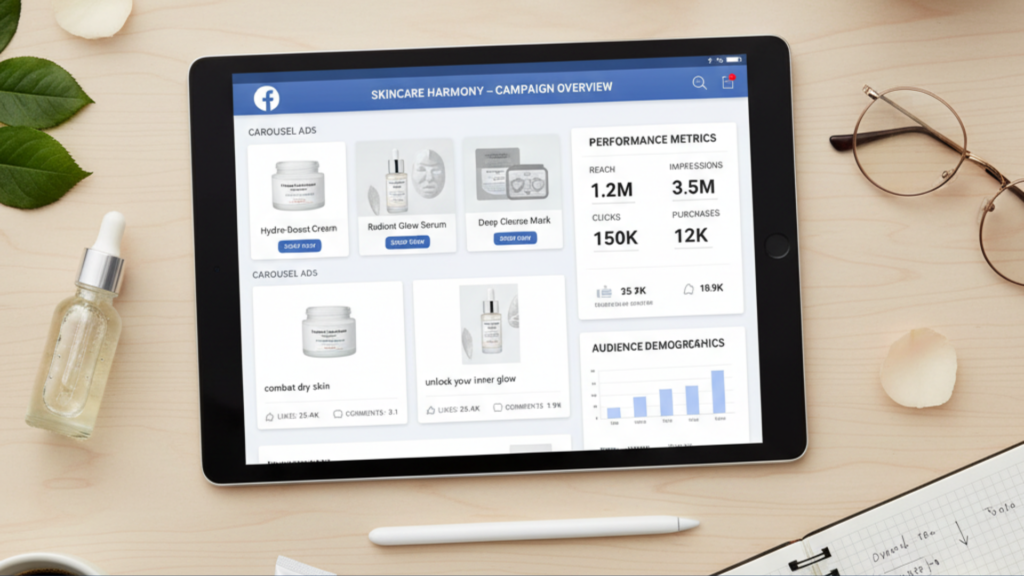
Facebook offers custom audiences and lookalike targeting, so you can reach people who are most likely to buy your product.
Storytelling hook: Imagine a small FMCG brand in Delhi. They ran a carousel ad showing a moisturizer in morning and night routines. Within 3 weeks, they saw a 35% increase in online orders and grew their email list by 5,000.
Defining Your Target Audience
Problem many brands face: They target too broadly. You waste money on clicks that don’t convert.
Solution: Segment your audience based on
Age: 18–40 for most skincare products
Gender: Women (primary buyers), but men’s skincare is growing
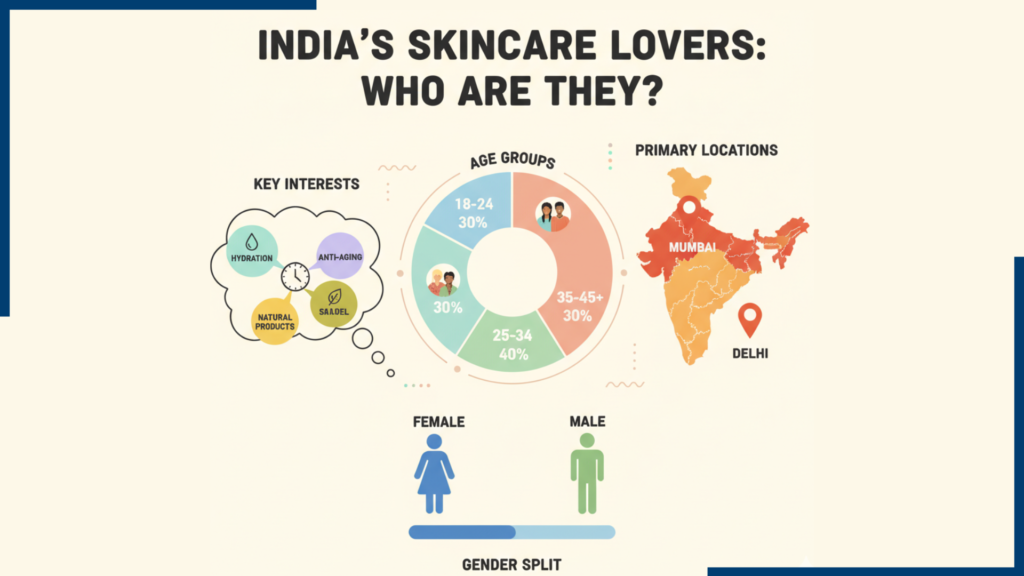
Location: Urban cities like Mumbai, Delhi, Bangalore
Interests: Skincare blogs, wellness, beauty influencers, natural products
Example: Target women aged 25–35 in Mumbai interested in anti-acne serums. Narrowing your audience reduces wasted spend and increases CTR by up to 20%.
Crafting Engaging Facebook Ads
Facebook ads must grab attention in 3 seconds. Use short sentences, benefit-driven copy, and real visuals.
Ad copy tips:
Focus on benefits: “Hydrates skin in 24 hours”
Ingredients matter: “With niacinamide & hyaluronic acid”
Solve a problem: “Say goodbye to dry, dull skin”
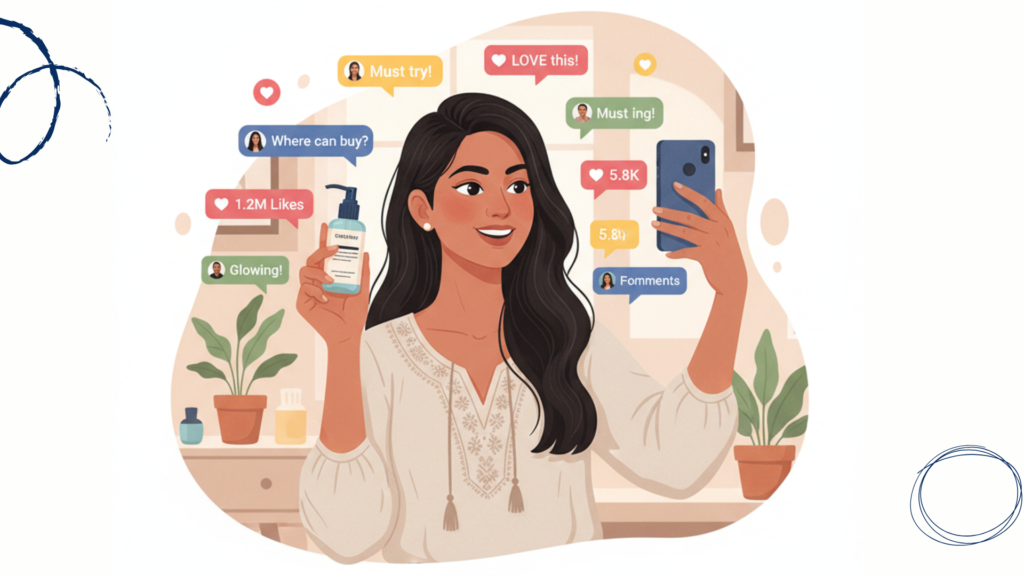
Visuals: Use before-and-after images, product-in-use shots, or simple graphics.
Ad formats: Carousel, Video, Stories, Reels.
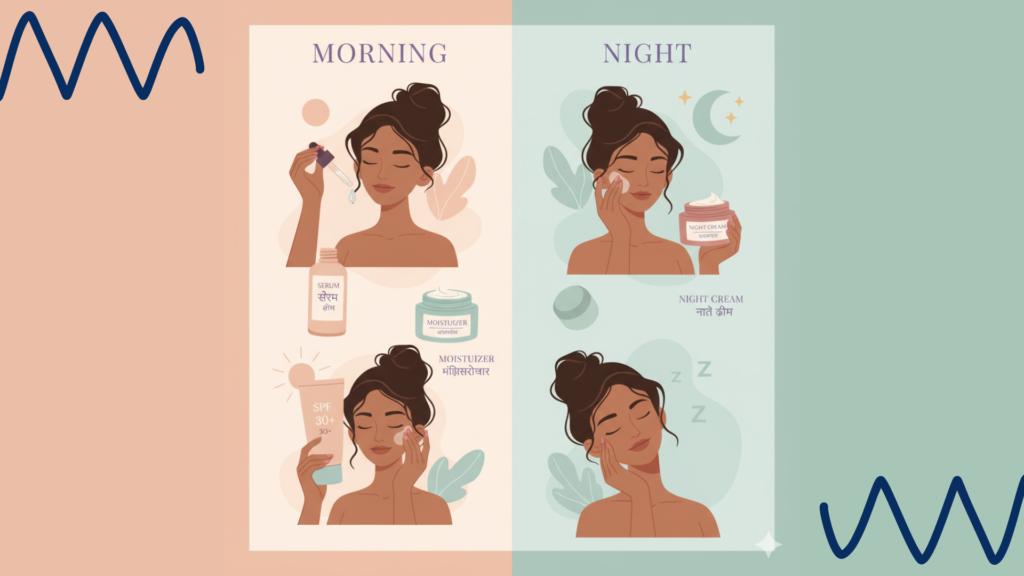
Example: A carousel ad with three slides:
1. Morning routine serum → “Glowing skin all day”
2. Moisturizer → “Hydration for 24 hours”
3. SPF → “Protect your skin while outdoors”
Leverage Content Marketing & User-Generated Content (UGC)
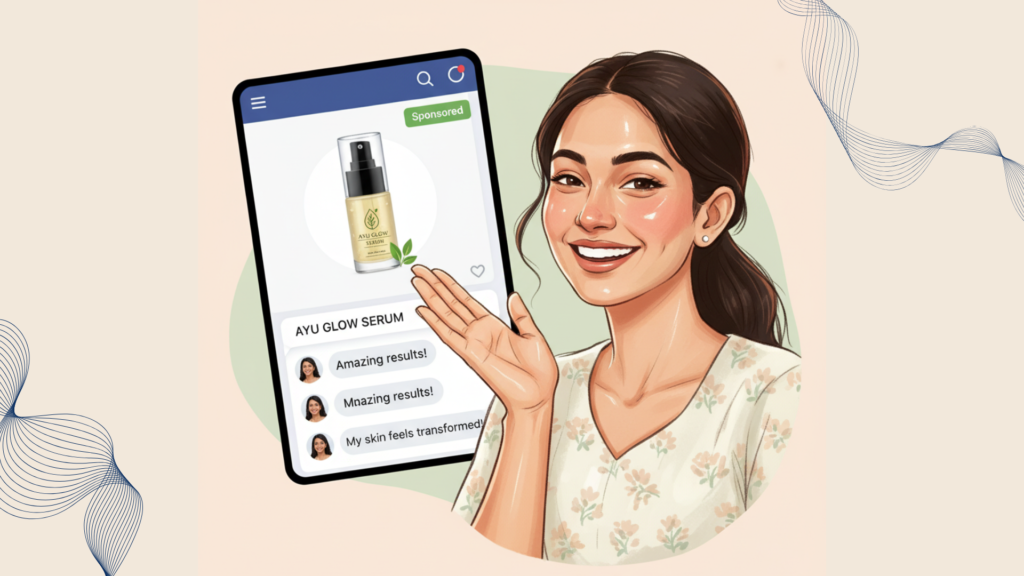
Consumers trust other users more than brand ads. UGC boosts credibility and engagement.
Example: A customer posts about glowing skin after using your serum. Share it on your Facebook page. Use it in ads.
Storytelling: A small Delhi brand asked 50 early buyers for testimonials. They shared video reviews. When used in ads, the CTR jumped by 40%, and sales doubled in 2 weeks.
Other tips:
Collaborate with micro-influencers
Encourage hashtags for your product
Share educational posts: “3 steps to hydrated skin”
Track, Test, and Optimize Campaigns
Problem: Many brands spend heavily but don’t track results.
Solution: Use Facebook Pixel and Insights. Track:
Click-through rate (CTR)
Conversions
Engagement
Return on ad spend (ROAS)
Example: Test two creatives:
1. “Hydration serum” vs
2. “Anti-aging serum”
Adjust based on performance. Small tweaks can double your sales.
Storytelling: Connect with Your Audience
Stories make your brand relatable. People buy from brands they trust.
Example story:
“Anjali, a 30-year-old working mom in Hyderabad, struggled with dull skin. She discovered our Vitamin C serum. After 2 weeks, her skin felt soft and radiant. She now recommends it to her friends and posts selfies using the hashtag #SkinFirstGlow.”
Use real stories in ads, posts, or testimonials. This creates emotional connection and increases conversion rates.
Actionable Takeaways
1. Define your skin-first product USP: hydration, natural ingredients, problem-solving.
2. Segment your Facebook audience carefully.
3. Use short, benefit-driven ad copy with real visuals.
4. Leverage UGC, testimonials, and micro-influencers.
5. Track, test, and optimize campaigns regularly.
6. Tell real stories to emotionally connect with consumers.
Conclusion
The skin-first beauty boom in India is a massive opportunity for FMCG brands. With Facebook marketing, you can reach the right audience, build trust, and boost sales. Use targeted campaigns, storytelling, and UGC to stand out. Start small, test campaigns, and optimize continuously.
Remember: Healthy skin sells more than makeup today. Tap into this trend and grow your FMCG brand in 2025.
If you are facing any problem in FMCG brand Facebook marketing, then definitely take a free consultation from us.